
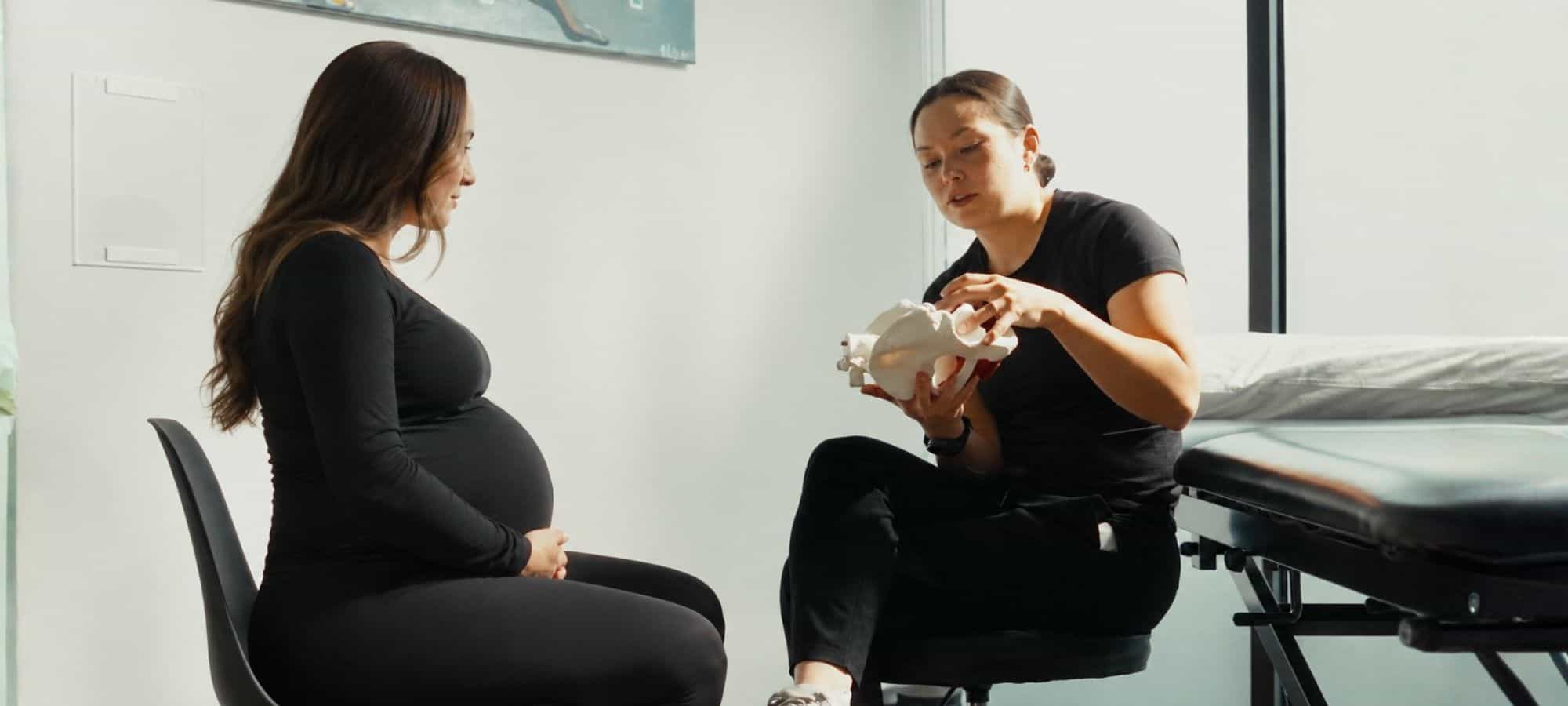
How Evidence-Based Physiotherapy Helps Pregnant Women in Greater Victoria Find Relief
Pregnancy is one of the most extraordinary experiences of a woman’s life, but for many, it also comes with a level of physical discomfort nobody warned them about. If you’ve been waddling through your days with deep, aching pain in your pelvis, hips, or lower back, you’re not imagining it, and you’re not alone. Pelvic girdle pain (PGP) affects up to 1 in 5 pregnant women, and for some, it can significantly impact daily life, from getting dressed in the morning to simply turning over in bed at night.
The good news? Evidence-based physiotherapy can make a real difference. Here’s what you need to know.
Key Takeaways
- Pelvic girdle pain (PGP) – affects up to 1 in 5 pregnant women and can range from mild discomfort to serious functional limitation.
- Causes are multifactorial – hormonal changes, shifting centre of gravity, and psychosocial factors all play a role.
- Physiotherapy works – targeted exercise, manual therapy, pelvic belts, and acupuncture are all evidence-based options.
- Start early – early intervention during pregnancy leads to faster, more complete recovery postpartum.
- Most PGP resolves – within 3 months postpartum for most women, but a subset continues to experience symptoms without treatment.
What Is Pelvic Girdle Pain (PGP)?
Pelvic girdle pain is a musculoskeletal condition that causes pain in the area of the pelvis, typically between the posterior iliac crest and the gluteal fold (the ‘seatbones’ region), around the sacroiliac joints (SIJ), and sometimes at the front of the pelvis at the pubic symphysis. It can radiate into the inner thigh or down the back of the leg.
PGP is distinct from general low back pain, though the two can co-exist. European clinical guidelines define it as pain arising in relation to pregnancy and distinguished from lumbar causes through specific clinical testing.
Common symptoms include:
- Pain deep in the buttocks or groin, especially with walking, climbing stairs, or rolling over in bed
- A clicking or grinding sensation in the pelvis
- Pain or instability after prolonged standing or sitting
- Difficulty with activities that require standing on one leg (like getting dressed)
- Waddling gait or difficulty walking long distances
What Causes Pelvic Girdle Pain in Pregnancy?
PGP is multifactorial. Hormonal changes, particularly the release of relaxin, increase ligament laxity in the pelvis in preparation for birth. While this is entirely natural, it can create a mismatch between joint mobility and the neuromuscular control required to stabilize that mobility under load. Add to this the shifting centre of gravity, increased body weight, and changes in postural alignment that accompany a growing baby, and the pelvis is under considerable new demands.
Research also supports a biopsychosocial model of PGP, meaning that stress, sleep disruption, and psychosocial factors can amplify pain perception. This is why a whole-person approach, not just a physical one, tends to produce better outcomes.
How Physiotherapy Helps Pelvic Girdle Pain in Victoria BC
A physiotherapist trained in pelvic health will first perform a thorough assessment, including specific provocative tests like the Active Straight Leg Raise (ASLR), Posterior Pelvic Pain Provocation Test (P4), and FABER test, to confirm the diagnosis and identify the structures involved. From there, treatment is highly individualized.
Evidence-based interventions include:
Targeted Exercise and Neuromuscular Re-education
Specific exercises targeting lumbopelvic stability, including the deep abdominals (transversus abdominis), pelvic floor, and hip stabilizers, are a cornerstone of treatment. Research shows that stabilization exercises significantly reduce PGP severity and improve function. The key is doing the right exercises: generic ‘core’ workouts are not appropriate for all presentations.
Manual Therapy
Hands-on techniques, including sacroiliac joint mobilization, myofascial release, and soft-tissue work, can reduce pain and improve movement quality. Your physiotherapist will select techniques that are safe for pregnancy, avoiding high-velocity manipulation.
Pelvic Support Belts
A non-rigid sacroiliac (SI) belt can provide meaningful symptom relief for many women by compressing and stabilizing the pelvic ring. Clinical trials support its use as part of a broader management plan. Your physiotherapist can advise on fit, wearing time, and when to wean off.
Acupuncture
A randomized controlled trial published in BMJ Open found acupuncture to be an effective intervention for pelvic girdle pain during pregnancy, comparable to TENS therapy, for maintaining physical activity levels and improving function.
Education and Activity Modification
One of the most impactful things a physiotherapist does is teach you how to move through your day without aggravating your pelvis. This includes sleep positioning, how to get in and out of a car, how to go up stairs, and how to safely return to activity postpartum.
At South Island Physiotherapy, our pelvic floor physiotherapy team brings the same evidence-based philosophy to pregnancy-related pelvic pain as we apply across all services, with personalized treatment plans grounded in clinical assessment.
Frequently Asked Questions
- What happens to PGP after the baby arrives?
For most women, PGP resolves within three months postpartum, but this isn’t universal. Without appropriate treatment, a subset of women continues to experience symptoms well beyond delivery. Beginning physiotherapy during pregnancy, rather than waiting, gives you the best chance of a full, fast recovery.
- When should I seek help for pelvic pain in pregnancy?
Don’t wait until the pain is unbearable. If pelvic pain is affecting your sleep, your ability to work, or your enjoyment of this pregnancy, it’s time to see a physiotherapist. Earlier intervention consistently produces better outcomes, and treatment is safe at every trimester.
- Is pelvic floor physiotherapy different from regular physiotherapy for PGP?
Pelvic floor physiotherapy is a specialized branch that includes internal assessment and treatment of the pelvic floor muscles, which play a central role in PGP. While general physiotherapy addresses lumbopelvic stability and movement, a pelvic health physiotherapist can assess the pelvic floor directly and tailor treatment to address contributing dysfunction. For many women with PGP, a combined approach produces the best outcomes.
Book Your Pelvic Girdle Pain Assessment in Victoria BC
If pelvic girdle pain is affecting your daily life, the team at South Island Physiotherapy in Saanich, Victoria is here to help. We offer evidence-based, personalized care for pregnancy-related pelvic pain, with direct billing to ICBC, WSBC, MSP, and most extended health plans.
Call us at (778) 433-4900, learn more about us online, or book your appointment today. We’re ready to help you move through pregnancy with less pain and a clear path to recovery.
Find us on Google Maps at 888 Short Street Victoria BC.